Atmosphere(s)
Overview
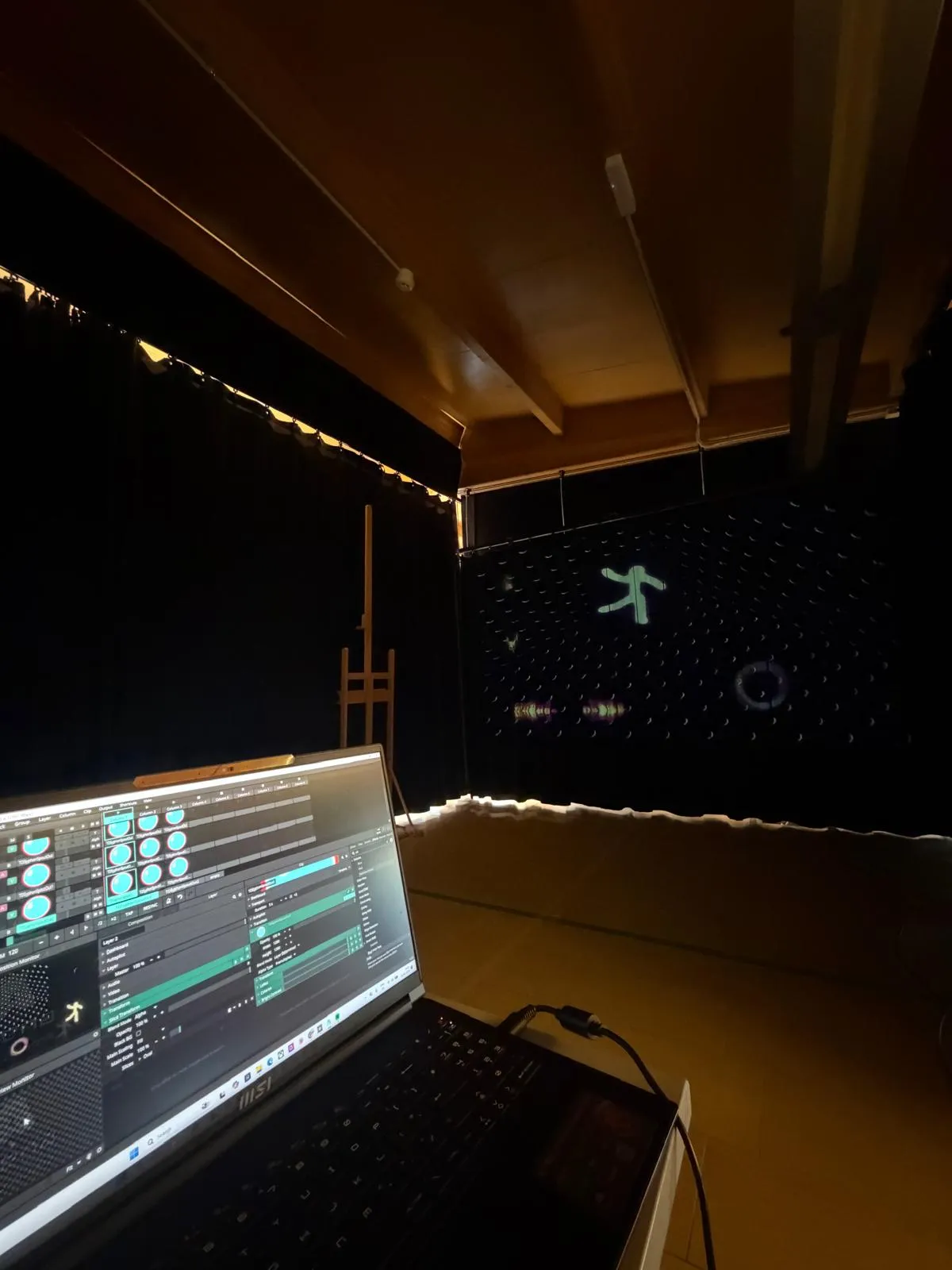
A real-time system that listens to music and answers it in light. Audio streamed from Spotify is routed through VB-Cable into TouchDesigner, where detailed spectral and dynamic analysis breaks the signal down — not only into frequency and amplitude, but into the qualities that give a track its feeling: its energy, its density, and the way it rises and releases.
From this reading, four generative visuals are driven live and passed into Resolume, where the same four elements are recomposed into three distinct themes — one visual language, transformed through colour, effect, and ground into three emotional registers.
The work treats sound not as data to be visualised, but as emotion to be read.
Signal Chain
Spotify ──→ VB-Cable ──→ TouchDesigner ─────────────────── Resolume
                               │                                │
                        spectral + dynamic               4 channels ×
                        analysis                         3 visual themes
                               │                                │
                        4 generative                   colour · effect · ground
                        visual streams                 = 3 emotional registers
The analysis reaches for what a piece of music is feeling, and the visuals become that feeling made spatial — reflecting and amplifying the atmosphere already latent in the room. Rather than imposing an image onto a space, the system draws on the emotional charge of the environment and returns it, until sound, image, and room settle into a single mood.
Three Registers
The four visual channels — a figure, a spectrum, a form, a ground — are constant. What changes between registers is their colour, their material, their weight. The same audio produces three distinct readings of the same emotional state:
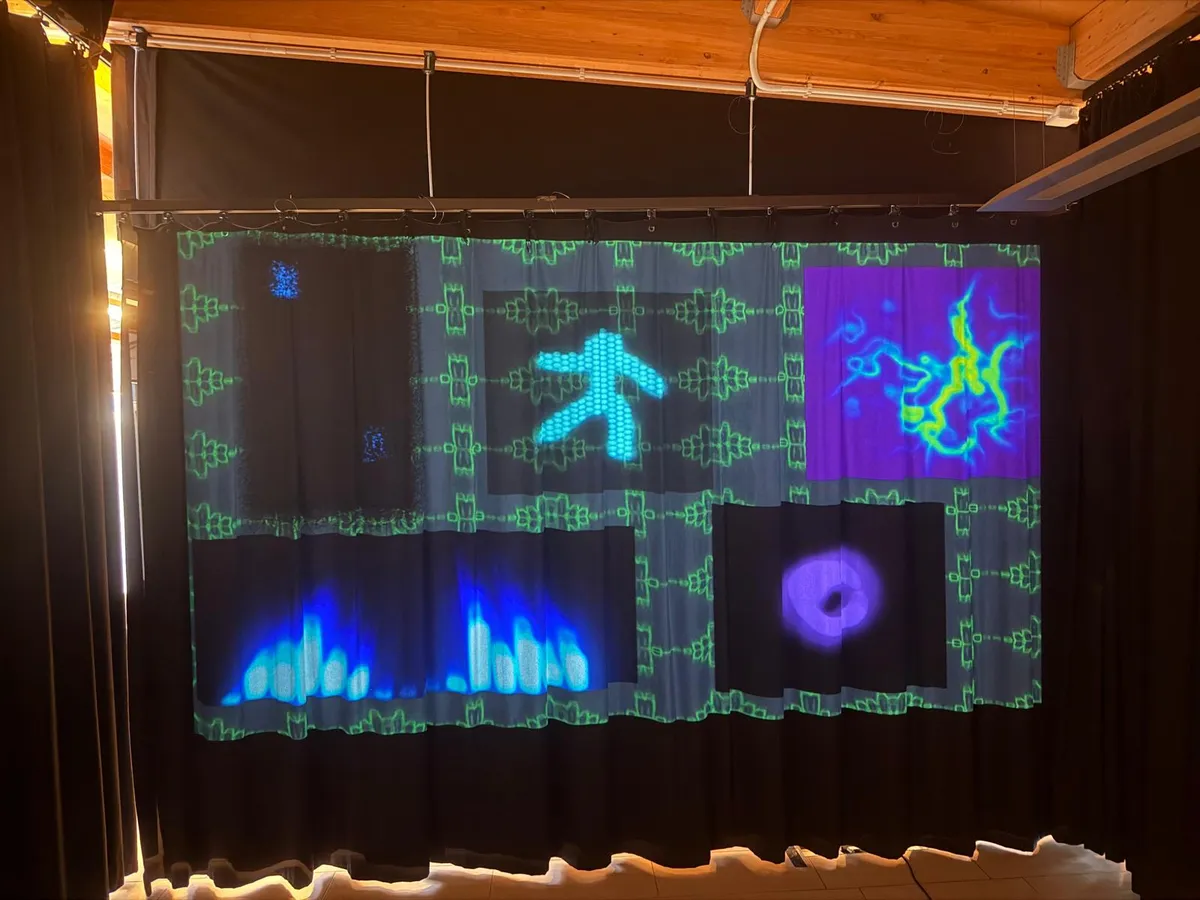
Electric — Circuit-board geometry, neon green and cyan, high contrast. The figure is pixelated and structural. Energy is anxious, precise, wired.
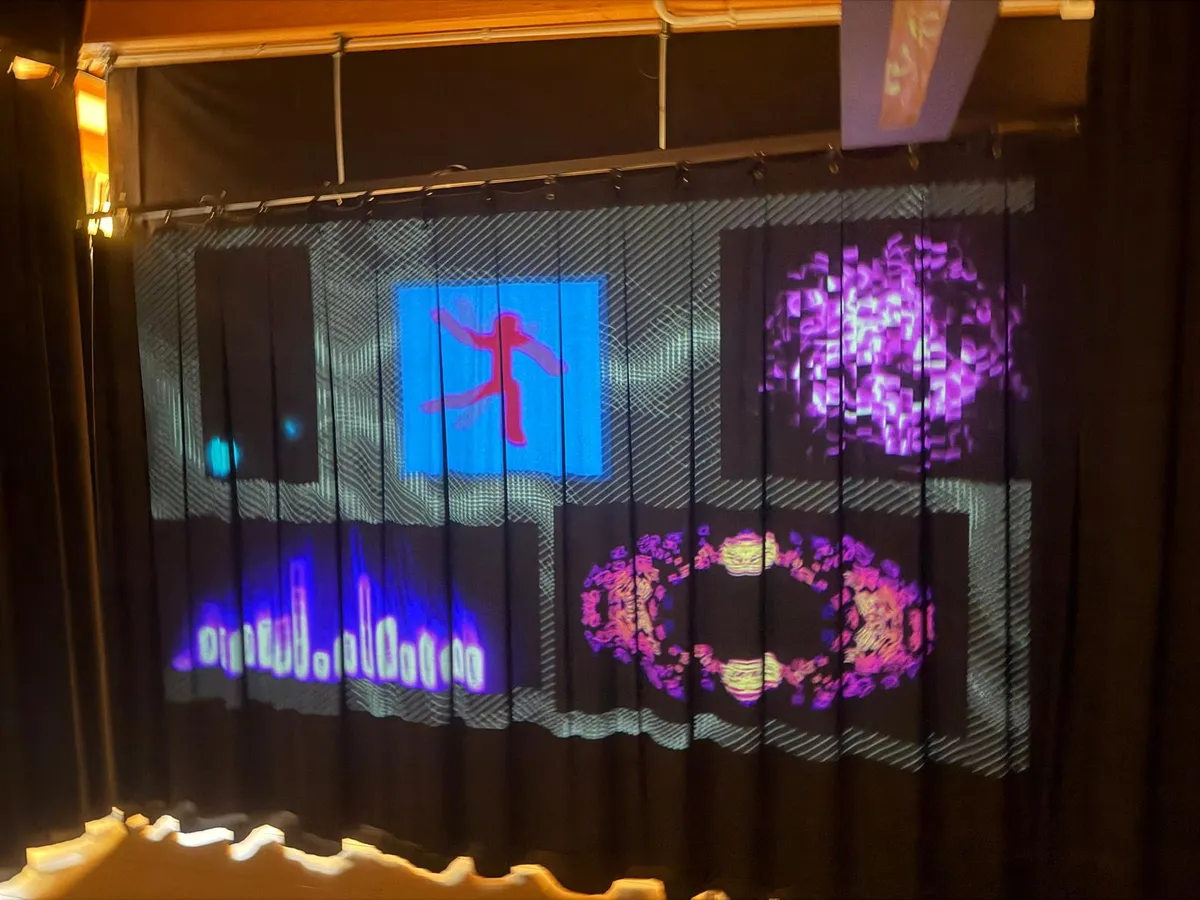
Warm — Blue city light and violet diffusion. The spectrum reads as skyline. Forms soften into orbs and rings. Urban, nostalgic, familiar.
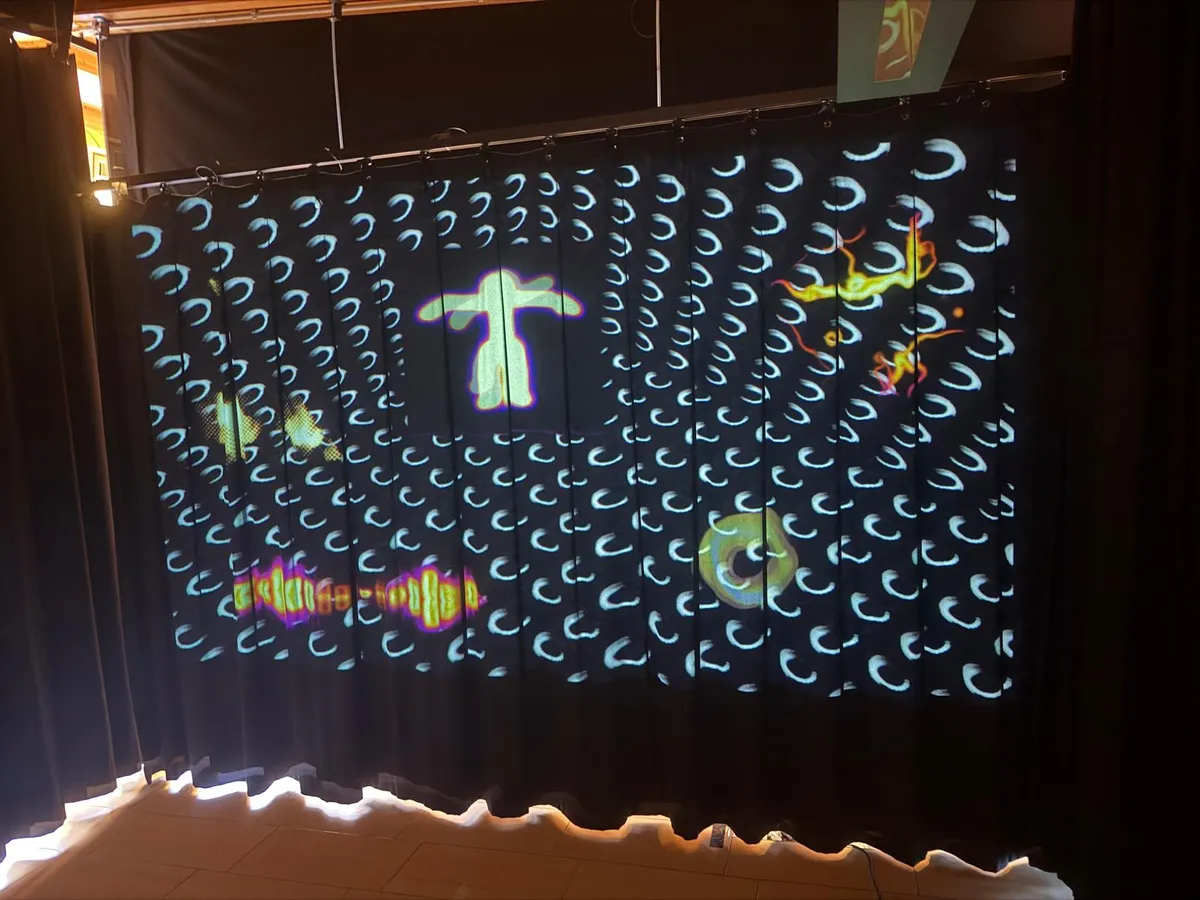
Spectral — Tiled crescent motifs blanket the ground. The figure becomes a ghost. Fire and serpentine drift move at the edges. Dreamlike, spatial, ambient.
Ongoing Inquiry
This is a first step in a longer inquiry: reading a space and reflecting it back to itself. What audio begins, other senses could extend — temperature, movement, light, the density of a crowd — each another channel through which a room might be read. And beneath it lies a deeper question the work only begins to touch: how colour and form themselves produce emotion, and how precisely that language might be composed rather than left to intuition.